
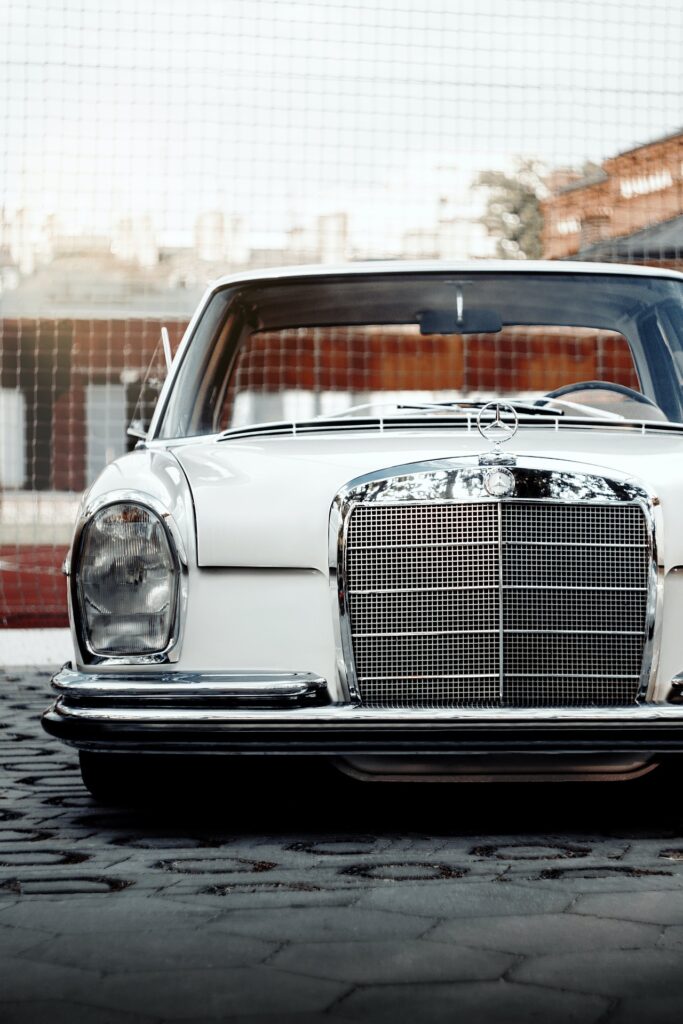
Last week I was in southern Germany, exploring Stuttgart, home of Mercedes-Benz, and Munich, home of BMW. This personal visit allowed me to experience firsthand the origins of these automotive giants and reflect on their deep-rooted histories and the impact they have had on society today and in the past. BMW, Mercedes-Benz, and Volkswagen (VW) are global icons in the automotive world, known for cutting-edge technology, innovation, and engineering. BMW and Mercedes-Benz dominate the premium market, while Volkswagen leads in the mass-market segment. Behind these polished brands lies a complex past: all three played major roles in wartime military production across both World Wars. This involvement not only shaped their legacies but also helped build the industrial strength and scale that allowed them to grow into the global companies we know today. With rising tensions in Europe and surging defense spending, the question is whether these automotive giants might pivot back into the military equipment supply chain. As the defense sector booms and the car industry slows, the conditions for crossover partnerships are emerging.

Military Background and Legacy
All three brands were deeply involved in military production in the 20th century. BMW, founded in 1916 as an aircraft engine maker, became known for lightweight, high-performance engines in World War I. Even after expanding into motorcycles and cars, aviation remained central, and by World War II, BMW was a major supplier of engines for the Luftwaffe. This experience expanded BMW’s technological know-how, engineering strength, and industrial scale, setting the stage for its postwar global success.
Mercedes-Benz played a similarly key role, supplying military trucks and engines during World War I and expanding under Nazi rule into tanks and armored vehicles. Military manufacturing bolstered the company’s technological foundation and helped it become one of the world’s leading premium automakers.
Volkswagen, launched in the 1930s under the “people’s car” project, was repurposed during World War II to build military vehicles like the Kübelwagen and Schwimmwagen. This wartime production expanded VW’s manufacturing capacity and laid the groundwork for its rise as a global automotive giant.
The Defense Industry on the Rise
Defense has become one of Europe’s fastest-growing industries. Armin Papperger, CEO of Rheinmetall, Germany’s largest arms producer, has noted that few expected such rapid growth, but European governments are now planning major increases in defense spending.
Companies like Rheinmetall, Hensoldt (known for electronic warfare equipment), and Renk (a military vehicle maker) are scaling up fast, driven by demand following Russia’s invasion of Ukraine. Stock prices have surged, and even investors once wary under environmental, social, and governance (ESG) standards are warming to defense firms. Automotive suppliers like Bosch and Continental are already partnering with defense companies, offering staff and facilities as the car industry slows. KNDS, a Franco-German company, has even taken over a former train factory to start producing tanks and armored vehicles.
With defense firms aiming to double or triple revenues by 2030, the sector’s growth is drawing the attention of automotive players facing rising electric vehicle costs and export pressures. The incentives for cooperation are steadily growing.
The Future: Will Automotive Giants Follow?
Although the re-engagement of BMW, Mercedes-Benz, and Volkswagen remains uncertain, it no longer feels far-fetched given the automotive sector’s challenges and the strong momentum in defense spending. With their history, expertise, and industrial power, these companies are well-positioned to pivot back into the military equipment supply chain. Still, postwar Germany has long been cautious about militarization, and these brands have spent decades building identities centered on civilian innovation, sustainability, and global reach.
Yet as the defense sector reshapes Europe’s industrial landscape, it’s increasingly plausible that they could be drawn back in. Their wartime production experience helped turn them into the global leaders they are today, and today’s geopolitical shifts may soon test whether they are prepared to play a role in defense once again.

Conclusion: A Convergence of Opportunity
The slowdown in the automotive sector, combined with the booming defense industry, creates a unique moment for collaboration. BMW, Mercedes-Benz, and Volkswagen share technological overlaps with military production — from lightweight materials to propulsion systems and advanced electronics.
Just as construction equipment firms are increasingly cooperating with defense players due to shared resources and expertise, Germany’s top carmakers have the factories, engineering talent, and global networks to contribute meaningfully. Defense could provide struggling automotive suppliers with a lifeline, while giving defense firms access to new capacity and skilled labor.
Whether BMW, Mercedes-Benz, Volkswagen, and their peers formally return to military production remains to be seen. But their shared history and technological strengths suggest that if the incentives align, they are more than capable of stepping into that role. In this moment of industrial change, the past and present are intersecting in ways that could reshape the future of both sectors.